


What Beginners Learn First in a Dog Grooming Class
Beginners in dog grooming classes first learn to understand canine behavior and proper handling to guarantee safety and comfort. They study how to read dogs’ body language and apply gentle restraint techniques that reduce stress. Identifying different coat types follows, along with the introduction of essential grooming tools like brushes and clippers. Safety practices are emphasized to prevent injuries dog grooming class. Basic bathing and brushing methods are also covered, laying a foundation for more advanced grooming skills.
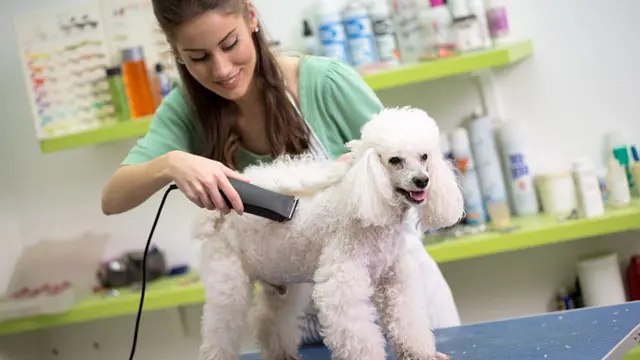
Understanding Canine Behavior and Handling Techniques
Why do dogs react differently during grooming sessions? Each dog’s response stems from unique past experiences, temperament, and comfort levels with handling.
Understanding canine behavior is crucial for groomers seeking a calm, cooperative environment. Observing body language—such as tail position, ear movement, and eye contact—helps identify stress or relaxation.
Proper handling techniques guarantee safety and respect, allowing dogs freedom within boundaries. Gentle restraint, slow movements, and positive reinforcement build trust Pet Universe Cosmos, reducing fear and resistance.
Recognizing signs of discomfort early enables timely adjustments, preventing escalation. This knowledge empowers groomers to work harmoniously with dogs, promoting a sense of freedom rather than confinement.
Mastery of these principles forms the foundation for successful grooming, where both handler and dog experience mutual respect and ease throughout the process.
Identifying Different Dog Coat Types
Coat types vary widely among dog breeds, each presenting unique grooming needs and challenges.
Recognizing these coat variations allows groomers to adapt techniques effectively, ensuring comfort and health.
Beginners first learn to distinguish the following primary coat types:
- Double Coat: Featuring a dense undercoat and a coarser topcoat, common in breeds like Huskies. Requires thorough brushing to prevent matting.
- Single Coat: Lacking an undercoat, this coat is often shorter and less dense, seen in breeds such as Greyhounds. Needs less frequent grooming but benefits from regular maintenance.
- Curly or Wavy Coat: Characterized tight curls or waves, typical in Poodles and Bichon Frises. Demands consistent attention to avoid tangles.
Understanding these distinctions grants groomers the freedom to tailor care to each dog’s natural coat characteristics.
Basic Grooming Tools and Their Uses
Recognizing the various coat types is only the first step in effective dog grooming; selecting the appropriate tools is equally important.
Essential tools include slicker brushes, used to remove mats and loose hair from dense or curly coats, and pin brushes, ideal for longer, flowing fur. Combs help detangle and smooth the coat, especially around sensitive areas like the face and paws.
Clippers and scissors are necessary for trimming hair to desired lengths, while nail clippers maintain paw health. Shedding blades and deshedding tools reduce loose undercoat in breeds prone to heavy shedding.
Each tool serves a distinct purpose, enabling groomers to tailor their approach to the dog’s coat and needs. Mastery of these tools provides freedom to groom efficiently and comfortably.
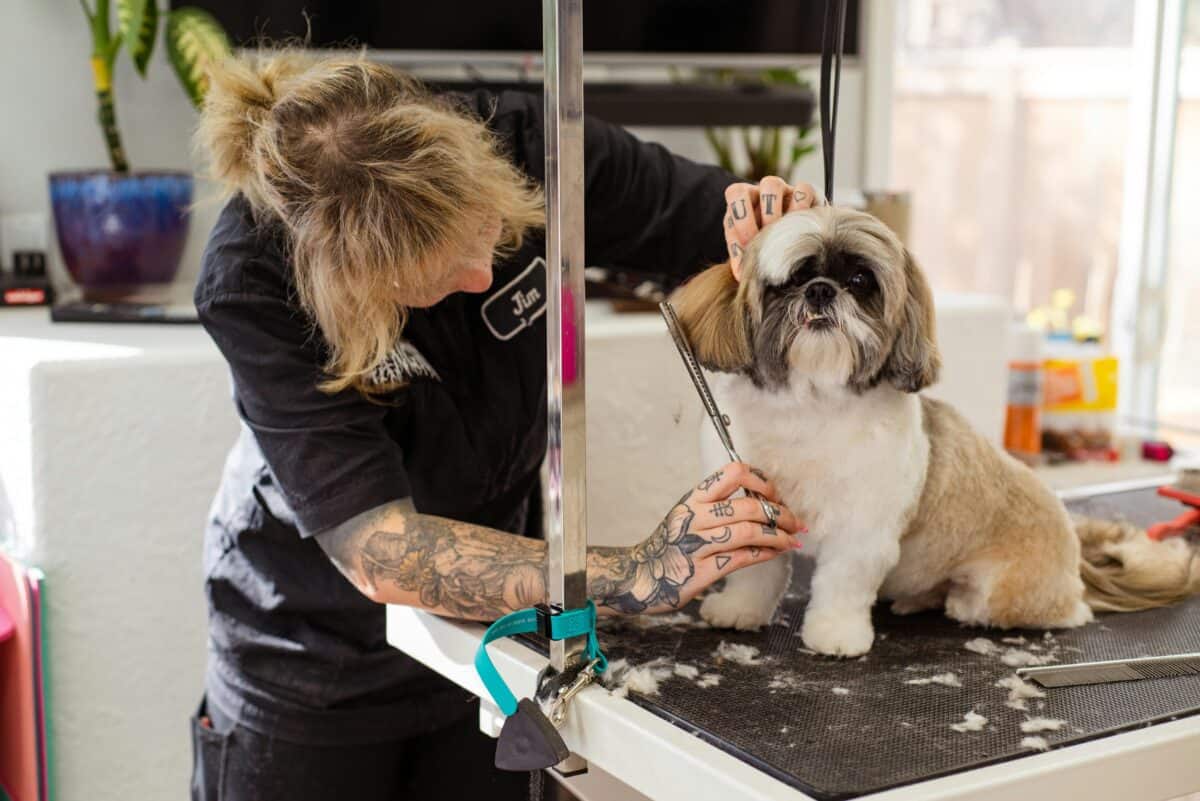
Safety Practices for Groomers and Dogs
Although grooming can be a routine task, maintaining strict safety practices is essential to protect both the groomer and the dog.
Beginners learn that awareness and precaution create a safe, stress-free environment. Proper restraint techniques prevent sudden movements without causing discomfort. Clean, sharp tools reduce injury risks and enhance efficiency. Additionally, recognizing signs of distress in dogs helps avoid accidents.
Key safety practices include:
- Using non-slip mats to prevent slipping for both groomer and dog.
- Wearing protective gear like gloves and aprons to minimize exposure to scratches and chemicals.
- Ensuring tools are sanitized and well-maintained to prevent infections or malfunctions.
These foundational safety habits empower groomers to work confidently while respecting the dog’s wellbeing and freedom of movement.
Techniques for Bathing and Brushing Dogs
When preparing a dog for grooming, effective bathing and brushing techniques are essential to maintain the animal’s health and appearance.
Bathing involves using lukewarm water and a dog-specific shampoo to avoid irritation. The groomer should work gently, ensuring thorough rinsing to remove all soap residues.
Brushing varies coat type; long-haired dogs require detangling brushes, while short-haired breeds benefit from firm bristle brushes. Consistent brushing prevents mats, distributes natural oils, and reduces shedding.
During these processes, maintaining calm and control allows the dog freedom to relax without feeling restrained.
Mastering these techniques empowers groomers to enhance each dog’s comfort and cleanliness, fostering a grooming experience that respects the animal’s independence and well-being.
Conclusion
Beginners in dog grooming classes first develop a foundational understanding of canine behavior and handling techniques, essential for safe and effective grooming. They learn to identify various dog coat types to tailor their approach accordingly. Instruction on basic grooming tools and their proper use equips them with necessary skills. Emphasis on safety practices guarantees well-being for both groomers and dogs. Finally, mastering bathing and brushing techniques completes the essential introductory knowledge for novice groomers.