


What Is Reflexology?
What Is Reflexology?
Reflexology is an alternative treatment that involves applying pressure to specific
points on the feet, hands and ears. These reflex points correspond to different parts
of the body, and it is believed that stimulating these areas can help balance your
entire system. Unlike a regular massage, which relieves muscle soreness in the feet,
reflexology addresses problems throughout your entire body massage Putrajaya. In fact, some research
has shown that it can decrease anxiety levels, reduce pain, increase blood flow and
even improve a cancer patient’s quality of life.

During a reflexology session, the client sits or reclines on a massage table with their
feet uncovered premium massage Spa. A trained reflexologist will apply a soothing lotion or cream to the
feet, and may use additional tools, such as foot rollers or specialized foot sponges.
The practitioner gently massages the foot, ankle and calf using a combination of
kneading, stroking and light rubbing. The goal is to alleviate any muscle soreness
and relax the entire leg, which in turn can reduce stress and tension throughout the
whole body.
A thumb press on the bottom of the foot’s solar plexus point can trigger a relaxation
response throughout the whole body, helping to ease pain and relieve stress. The
technique of “breeze strokes,” which lightly run the fingertips along the tops,
bottoms and sides of each foot, is also very soothing to the nerves. Many people find
that reflexology transports them to a place of deep relaxation, and they often
choose to listen to soothing music or count their blessings before drifting off to
sleep.
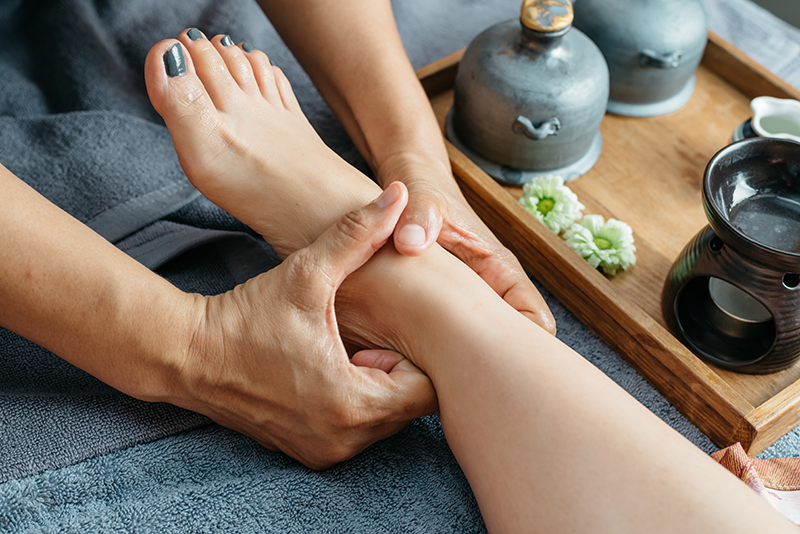
Reflexology works on the theory that the nervous system is closely connected to the
body’s organs, glands and muscles. When a reflexologist presses on certain areas of
the foot, it sends a message to the central nervous system that stimulates
circulation and helps the body heal itself. Studies have shown that reflexology can
help improve a variety of conditions, such as lowering anxiety in varicose vein
surgery patients and decreasing PMS symptoms in women. It can even help cancer
patients reducing nausea, vomiting and fatigue.
If you have a chronic condition, make sure your reflexologist is aware of any
medications you are taking. If you have a medical condition that affects your feet,
such as diabetes or gout, you should not receive a reflexology foot massage. Also,
avoid reflexology if you have open wounds on your feet or a history of foot trauma or
injury.
The main benefit of reflexology is that it can alleviate a wide range of conditions,
from back pain to menstrual cramps and headaches. In addition, the therapy can
promote sleep and boost energy levels, both of which can improve concentration
and focus. A reflexology session can even lower your blood pressure, and the
relaxing effects will continue for hours after the session has ended. If you’re thinking
of pursuing a career in reflexology, be sure to pursue specialty certification through
an accredited program. Then you’ll be able to offer a service that goes well beyond
just a traditional foot massage.